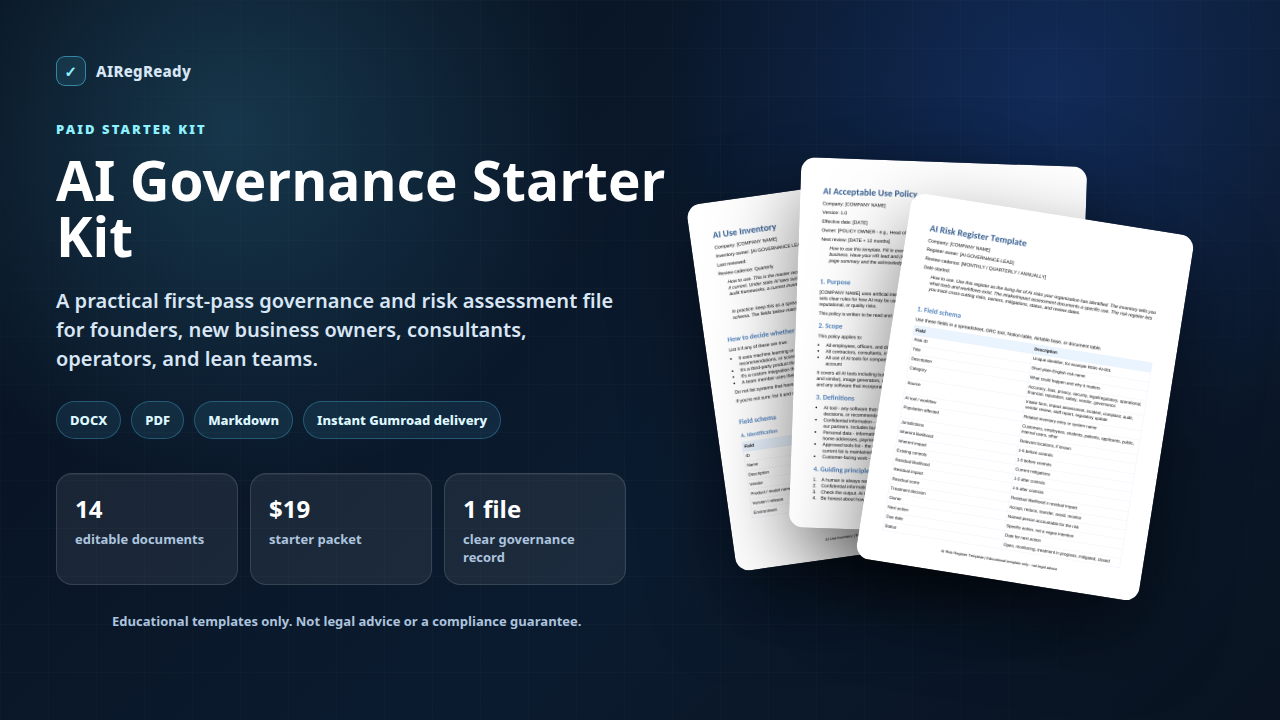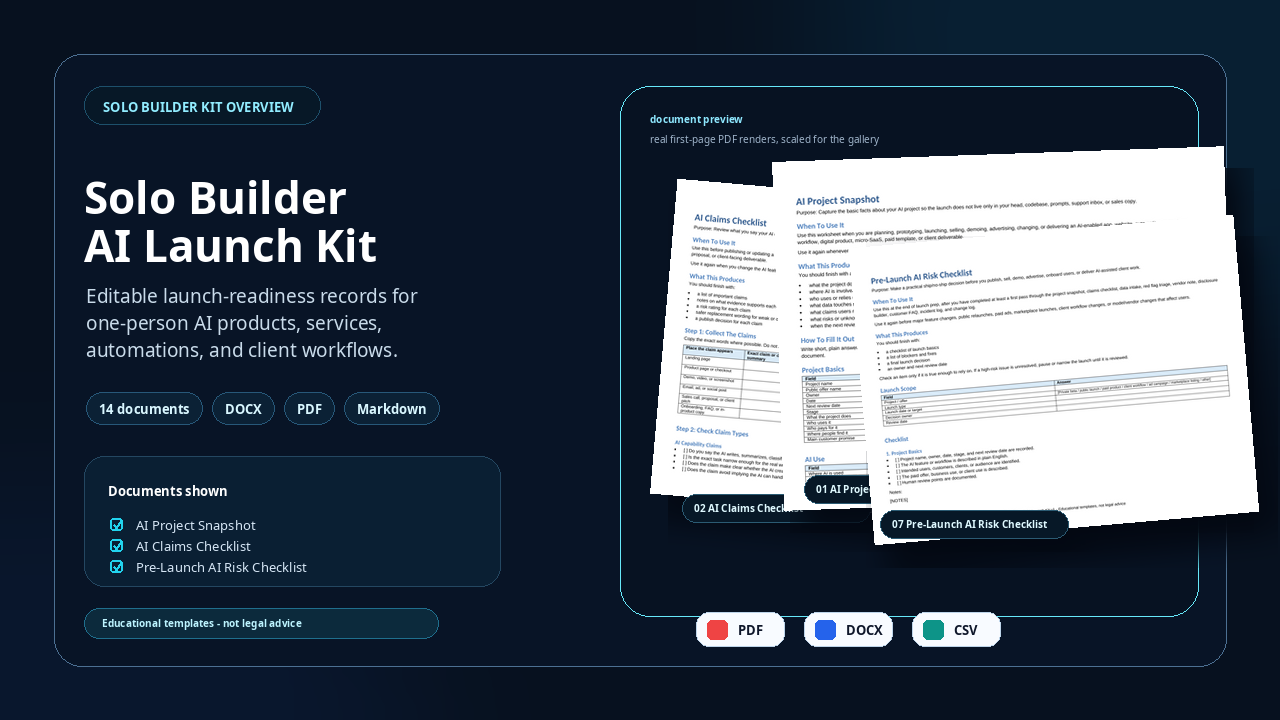
AI Governance Starter Kit
KitWho it is for
Founders, operators, and small teams starting from scattered AI use.
What is inside
Why it helps
Creates a first governance file that explains what AI is used, who owns it, and what review steps exist.
AI governance resource catalog
Browse educational templates, checklists, trackers, guides, and document packages for internal AI governance work. No resource promises compliance or replaces qualified legal advice.

Flagship kit
A practical starting package for teams that need a credible, editable governance file before AI use grows further. Use it to document tools, assign ownership, review vendors, train staff, and keep update notes in one organized place.
Educational starting point only. Review specific obligations with qualified counsel.
Included resources
AI use inventory
Acceptable use policy
Risk intake form
Vendor review checklist
Training outline
Incident response worksheet
Governance meeting agenda
Update tracker
Full catalog
Each resource is framed as an educational starting point for internal governance work. Do not treat templates as legal advice or a compliance guarantee.
Who it is for
Founders, operators, and small teams starting from scattered AI use.
What is inside
Why it helps
Creates a first governance file that explains what AI is used, who owns it, and what review steps exist.
Who it is for
Teams that need clear internal rules before staff use expands further.
What is inside
Why it helps
Sets practical guardrails for tools, data, output review, confidentiality, and escalation.
Who it is for
Organizations reviewing higher-impact AI use cases or customer-facing workflows.
What is inside
Why it helps
Turns risk conversations into structured records that can be revisited as systems change.
Who it is for
Buyers, school leaders, consultants, and operations teams choosing AI tools.
What is inside
Why it helps
Documents privacy, training data, retention, security, oversight, and contract questions.
Who it is for
Teams that need a response path for harmful outputs, leaks, or AI system failures.
What is inside
Why it helps
Defines who responds, what gets recorded, and how lessons feed back into governance.
Who it is for
Schools, nonprofits, startups, and businesses training staff on responsible AI use.
What is inside
Why it helps
Creates a lightweight training record and gives staff plain-English operating rules.
Who it is for
Teams tracking multiple AI rules without hiring a full policy staff.
What is inside
Why it helps
Organizes tracked topics into practical next steps without claiming legal conclusions.
Who it is for
Organizations that need to triage EU-facing AI systems and documentation gaps.
What is inside
Why it helps
Frames internal preparation questions for teams that may need qualified legal review.
Who it is for
U.S. teams watching state AI rules for consequential decision use cases.
What is inside
Why it helps
Helps teams organize questions, records, and review habits around a tracked state topic.
Who it is for
Schools, nonprofits, associations, and mission-driven operations teams.
What is inside
Why it helps
Creates practical rules for staff AI use, sensitive data, vendor adoption, and review.
Who it is for
Solo founders, startups, and small companies that need credible basics.
What is inside
Why it helps
Builds a lightweight process for product, sales, vendor, and customer questions.
Who it is for
Consultants who need educational deliverables and structured client workshops.
What is inside
Why it helps
Supports repeatable client delivery while leaving legal advice to qualified counsel.
Tracked topics
Tracked topics are used for educational updates, checklists, and preparation prompts. They are not legal determinations for a specific organization.
AIRegReady provides educational information and practical resources. It is not a law firm and does not provide legal advice. Resources are starting points for internal governance work and should be reviewed with qualified counsel for specific legal obligations.